
Don’t get too close to the television for this Spielberg-produced ghostly adventure that will most likely leave you in wonder, rather than terror.
The 1982 film Poltergeist is a unique blend of horror cinema and big-screen blockbuster. It managed to retain the spookiness of a ghost story, whilst adding the sense of wonder that accompanies the work of Steven Spielberg.
During 1982, legal complications regarding the production of E.T the Extra Terrestrial kept Spielberg from the director’s chair of other films. Eager to bring his self-penned story of a family terrorised by spirits to the big screen, Spielberg hired veteran filmmaker Tobe Hooper, most famous for having directed The Texas Chainsaw Massacre, to direct. Spielberg himself was screenwriter and producer.
Poltergeist is Spielberg all over. By 1982, he had already directed Close Encounters of the Third Kind (1977) and Raiders of the Lost Ark (1981). Often cited as having created the first summer blockbuster with Jaws in 1975, Spielberg had certainly put his stamp on cinema. Despite Tobe Hooper being the film’s director, this definitely sits much closer to Spielberg’s spirit of moviemaking, combining memorable visual effects, a dramatic orchestrated score and the pure sense of awe and adventure that moviegoers recognise in his filmmaking.
The film follows the plight of your average, suburban, American family who are visited in their own home by – you guessed it – poltergeists. Youngest daughter to the family Carol Anne (Heather O’Rourke) manages to connect with a spirit through a television set left on static and soon after strange goings-on torment the family. At first they are prankster-ish, rearranging chairs and moving items. Soon, however, the film takes a darker turn when Carol Anne is abducted, through the television, into the world of spirits, trapped in between life and death. With help from parapsychologists and a spiritual medium, the family are eventually reunited, although not before experiencing more than their fair share of terror.
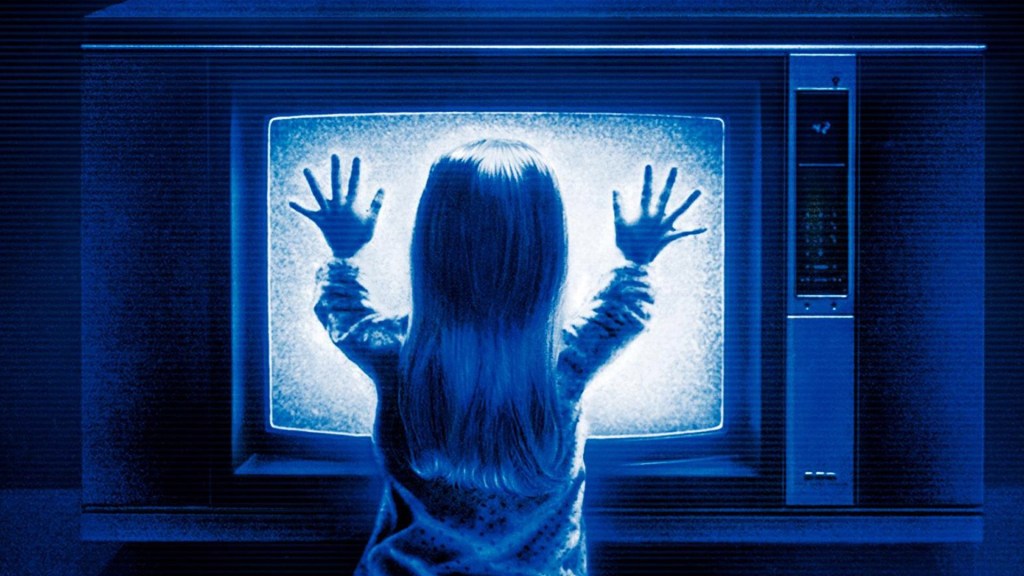
The first things to commend in Poltergeist are the range of performances on display. In particular, Craig T. Nelson portrays the father in the family with a sense of real humanity – desperate to see his daughter again, yet skeptical of what ghost hunters and a psychic can really do to help. Opposite Nelson, JoBeth Williams stars as the ever-hopeful and fantastically courageous mother, stopping at nothing to bring back her little girl – even if that means taking a dive right through purgatory itself. The supporting cast are all fairly memorable, especially Zelda Rubinstein as Tangina Barrons, the sassy and often-hilarious spiritual medium and even Heather O’Rourke and Oliver Robins, though children at the time, gave convincing performances despite the old adage that child actors are a nightmare to work with.
The work that visual effects company Industrial Light and Magic (ILM) did for Poltergeist is probably what makes this film so memorable. The company had already worked on Star Wars, and their unique sense of scale was not lost on the horror film. They proved that they had no trouble switching between animated demons and ghostly hands and practical effects, such as with the gruesome scene where a parapsychologist rips off his own face. Whilst their work does now look just a little dated, overall it has held up over time and took horror filmmaking away from often dismal realism and into the world of fantasy, using illuminating colour and an experimental attitude that led to some captivating moments on screen.
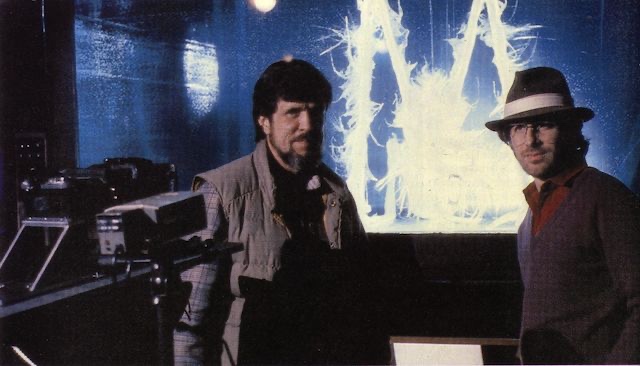
However, there is one problem. Whilst I thoroughly enjoyed watching Poltergeist, I personally did not find it to be a scary experience. Many people remember being terrified by the film as a child, but now find it almost lacklustre and dated in its horror elements. Sure, it has it’s moments – most notably featuring a certain clown doll – and doesn’t rely on jumpscares like so many films today, but overall it is a sense of adventure that prevails when the credits roll, instead of terror. I think that the work of ILM, paired with a dramatic score by Jerry Goldsmith, did more to create the “Spielberg spectacle”, although I must admit that this combination does give the movie a magical quality.
Overall, I think that Poltergeist is definitely a film I will be watching again. It does have the spookiness for an October-night sofa session, but it is the adventure that is drawing me back. This is really a summer blockbuster (which it almost was, being released on June 4th of 1982) disguised as a horror film. Whilst it may not be the scariest movie you’ll watch this Halloween, it will certainly be a spirited adventure into the world of suburban hauntings.
 Build the Scene Reviews